




- Choosing a selection results in a full page refresh.
Welcome to Smart E Shop
Welcome to Smart E Shop
Welcome to Smart E Shop
Welcome to Smart E Shop
Welcome to Smart E Shop
Welcome to Smart E Shop
Welcome to Smart E Shop
Welcome to Smart E Shop
Welcome to Smart E Shop
Welcome to Smart E Shop
Welcome to Smart E Shop

Call/WhatsApp
+92313-586 51 52
 Click Order On
WhatsApp
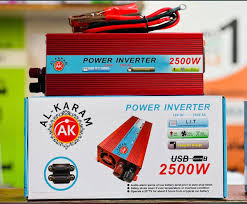
Converting DC (Direct Current) to AC (Alternating Current) typically involves the use of an inverter. An inverter is an electronic device that changes the DC voltage to AC voltage, allowing you to power devices that require AC power from a DC source, such as a 12V battery. Here's a basic description of how this conversion process works:
1. **DC Input**: The 12V DC power source (e.g., a battery or a DC power supply) serves as the input to the inverter.
2. **Inverter Circuitry**: Inside the inverter, there is a circuit that converts the DC voltage to AC voltage. This often involves using electronic components like transistors and capacitors to create an oscillating signal that mimics the characteristics of AC power.
3. **Transformation**: The inverter transforms the DC voltage into a sinusoidal or square wave AC voltage. The type of waveform produced depends on the design of the inverter. Pure sine wave inverters generate a smooth AC waveform similar to what you get from the electrical grid, while modified sine wave or square wave inverters produce a more stepped waveform.
4. **Voltage Regulation**: The inverter may also include voltage regulation circuitry to ensure that the output AC voltage remains stable within a certain range, despite variations in the input DC voltage or changes in the load.
5. **Output**: The converted AC voltage, now at 220V (or another specified output voltage), is then available at the output terminals of the inverter.
6. **Usage**: The 220V AC output can be used to power household appliances, electronic devices, or any equipment that requires standard AC power.
It's important to note that the efficiency and quality of the inverter play a significant role in the performance of the converted power. Higher-quality inverters often provide a cleaner and more stable AC output, which is crucial for sensitive electronic devices. Additionally, the power rating of the inverter must be sufficient to handle the load (wattage) of the devices you intend to power.
Important: All returns require prior approval from SmartEshop.pk.
Get the latest updates on new products and upcoming sales
Thanks for subscribing!
This email has been registered!